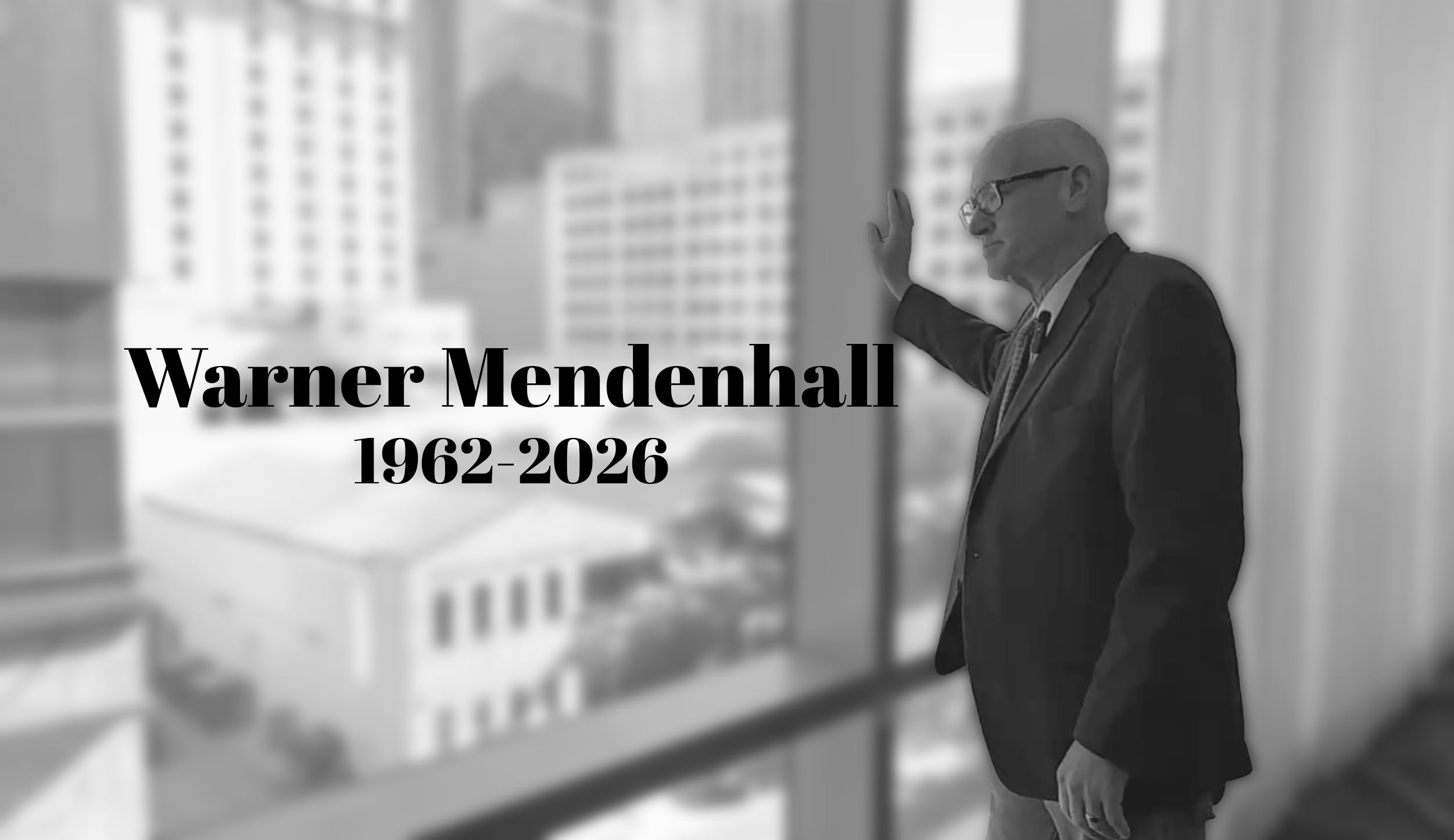
The Broken Truth Legal Podcast, part of the Freedom Counsel series on BrokenTruth.TV, returned this week with its first episode since the passing of co-host and Freedom Counsel founder Warner Mendenhall. In a poignant opening, host John Davidson paid tribute to his dear friend and colleague, noting that Warner passed away after a courageous battle with colon cancer. Davidson emphasized that “the show must go on and the fight continues,” echoing Warner’s own words and spirit. A more elaborate online memorial is planned.
The episode features Arizona attorney Ryan Heath of The Gavel Project and California attorney Jeremy Friedman, discussing a landmark student free speech case currently headed to the U.S. Supreme Court. The conversation underscores the ongoing mission Warner championed: defending constitutional rights, exposing government overreach, and connecting attorneys in the fight for medical freedom and due process.
Warner Mendenhall: A Life Devoted to Accountability and Freedom
Warner Mendenhall was a tireless advocate for ordinary citizens against government abuses, corporate fraud, and the erosion of constitutional liberties. A politically active Ohioan, he served two terms on the Akron City Council in the early 1990s, where frustration with the city law department’s responses to constituent concerns prompted him to attend law school. He earned his J.D. from the University of Akron (after a B.A. from the same institution and an M.A. from Kent State University) and was licensed to practice in the late 1990s.
His early legal victories included exposing block grant fraud and successfully defending charter amendments in Akron—cases that solidified his calling as a mission-driven attorney. Warner founded the Mendenhall Law Group (with offices in Akron, Ohio, and Boston, Massachusetts), building a practice focused on holding governments and corporations accountable.

His areas of expertise included the False Claims Act (qui tam/whistleblower litigation involving Medicare, Medicaid, defense contracting, and federal grant fraud), municipal law, eminent domain and property law, personal injury, bankruptcy, criminal defense, and small business matters. He was admitted to practice before the Ohio Supreme Court, multiple federal district and circuit courts, and the U.S. Supreme Court.Warner’s work gained national prominence during the COVID-19 era. He represented whistleblowers challenging mandates and hospital protocols, often pro bono. Notably, he served as counsel for Brook Jackson in her high-profile lawsuit against Pfizer, alleging irregularities in the company’s COVID-19 vaccine clinical trials. He also litigated multiple cases against Ohio public universities over COVID shot mandates and other matters involving medical freedom and informed consent.
In 2023, following the COVID Litigation Conference in Atlanta (sponsored by the Vaccine Safety Research Foundation and his own firm), Warner founded Freedom Counsel. The organization serves as a vital network connecting hundreds of attorneys, medical professionals, scientists, and citizens dedicated to fighting mandates, shutdowns, medical interference, dangerous hospital protocols, vaccine-related issues, data manipulation, and broader attacks on personal rights and liberties. Its mission aligns closely with Warner’s lifelong passion: educating the public, elevating important cases, and empowering individuals denied due process and constitutional protections. Warner co-hosted the Broken Truth / Freedom Counsel Podcast, where he brought his sharp legal insight, cowboy-like willingness to “throw punches” for justice (as John Davidson fondly recalled), and deep commitment to the rule of law. Tributes following his passing—from U.S. Senator Ron Johnson, Brook Jackson, and many others—highlighted him as a fearless champion for medical freedom, the vaccine-injured, and constitutional principles. He built coalitions, mentored attorneys, and continued strategizing legal resources even in his final days.
The Ryan Heath Interview: Misuse of Anti-SLAPP Laws and a Student’s Fight for Free Speech
The episode shifts focus to a compelling case that Warner personally championed as lead counsel for the U.S. Supreme Court proceedings: G.W. v. Coronado Unified School District, et al. Ryan Heath (Arizona attorney and founder of the nonprofit Gavel Project) and co-counsel Tracy Henderson (California attorney) represent the plaintiff—a brave young woman who, as a teenager in early 2022 at Coronado High School (a performing arts school on Coronado Island in San Diego), protested the lingering mask mandates through expressive conduct.
The student would enter class, politely remove her mask, and refuse to leave, clearly conveying her disagreement with the policy. In response, over six weeks, teachers allegedly humiliated her, alienated her from classmates, kicked her out of class, denied her learning materials and the opportunity to take tests with peers, and even moved entire classes to different rooms to avoid her. She missed approximately one-third of the academic year. During a lockdown drill, she was isolated alone in an unlocked bathroom—described as a potential “fish in a barrel” scenario. Ryan Heath detailed how the school’s actions amounted to viewpoint discrimination and compelled orthodoxy, violating core First Amendment principles established in cases like Tinker v. Des Moines and West Virginia State Board of Education v. Barnette.
The lawsuit, filed in San Diego Superior Court under 42 U.S.C. § 1983 (and including a California Bane Act claim for interference with civil rights by intimidation or threats), alleged expressive conduct protected by the First Amendment. The student was not disruptive, posed no danger to others, and was exercising her right to dissent peacefully. The complaint also named over 20 individual defendants alongside the school district.In a shocking turn, the school district and individual defendants filed four anti-SLAPP motions (Strategic Lawsuit Against Public Participation under California Code of Civil Procedure § 425.16). They argued that their own actions—punishing and silencing the student’s dissent—constituted protected free speech. The trial court granted the motions, crediting the defendants’ affidavits over the plaintiff’s sworn statements and ruling that the conduct was protected “as a matter of law” without identifying specific protected statements or actions. The California Court of Appeal (Fourth District) affirmed, skipping the required two-prong analysis: defendants failed to meet their initial burden of showing the suit arose from protected activity on a matter of public interest, yet the burden improperly shifted to the plaintiff. This led to significant attorney fee awards against the young plaintiff (now in her early 20s and a college graduate), currently in the low six figures with ongoing appeals. Co-counsel Tracy Henderson faced sanctions of $13,000 personally, a requirement to take a class, and a bar report for challenging jurisdiction in a subsequent appeal—actions Ryan Heath and Jeremy Friedman described as retaliatory.
The case is now before the U.S. Supreme Court via petition for writ of certiorari. Procedural complications have arisen because Tracy Henderson was not initially listed on the appellate caption despite her direct interest; the SCOTUS clerk requires clarification. The team filed a petition for writ of mandate in the California Supreme Court to correct this clerical issue before a June 19 deadline, with plans for potential sticker amendments or refiling if needed. Robert Barnes has signed on pro bono, and there is hope he will assume a lead role.
Jeremy Friedman, a California attorney and friend of Warner’s, provided expert analysis on the anti-SLAPP statute’s original purpose: protecting citizens from baseless “lawfare” suits that chill First Amendment activity by draining resources. Here, the law was allegedly inverted—used as a sword by the government to punish dissent and award fees to the powerful. Both attorneys stressed the dangerous precedent: if punishing viewpoint discrimination can be reframed as protected government speech, it could eviscerate civil rights claims nationwide (e.g., against police or other officials enforcing policies).
Ryan Heath shared his broader work through The Gavel Project, including teaching students civil disobedience modeled on Rosa Parks, leading protests across California, and filing related lawsuits. He worked alongside Warner on other matters, including a successful Arizona case for Dr. Lee Vliet and Truth For Health. He described Warner as a mentor and dear friend whose loss is devastating, especially as lead counsel on this SCOTUS effort.
View court briefs here.

The Fight Continues
Throughout the episode, the tone was one of grief mixed with resolve. John Davidson, Ryan Heath, and Jeremy Friedman all affirmed that Warner would want the movement to press forward. The case highlights critical issues: the proper application of anti-SLAPP laws, protection of student expressive conduct in schools, and the need for higher courts to correct lower-court errors that undermine constitutional rights.Warner Mendenhall’s legacy endures through Freedom Counsel’s network, the cases he elevated, and the attorneys he inspired. As the podcast continues, it carries forward his commitment to truth, accountability, and liberty.
For those wishing to support Freedom Counsel’s work or learn more about the ongoing legal efforts, visit freedomcounsel.org. The battle for constitutional principles does not end—it evolves, strengthened by the foundation Warner helped build.
Rest in peace, Warner. Your work lives on.