

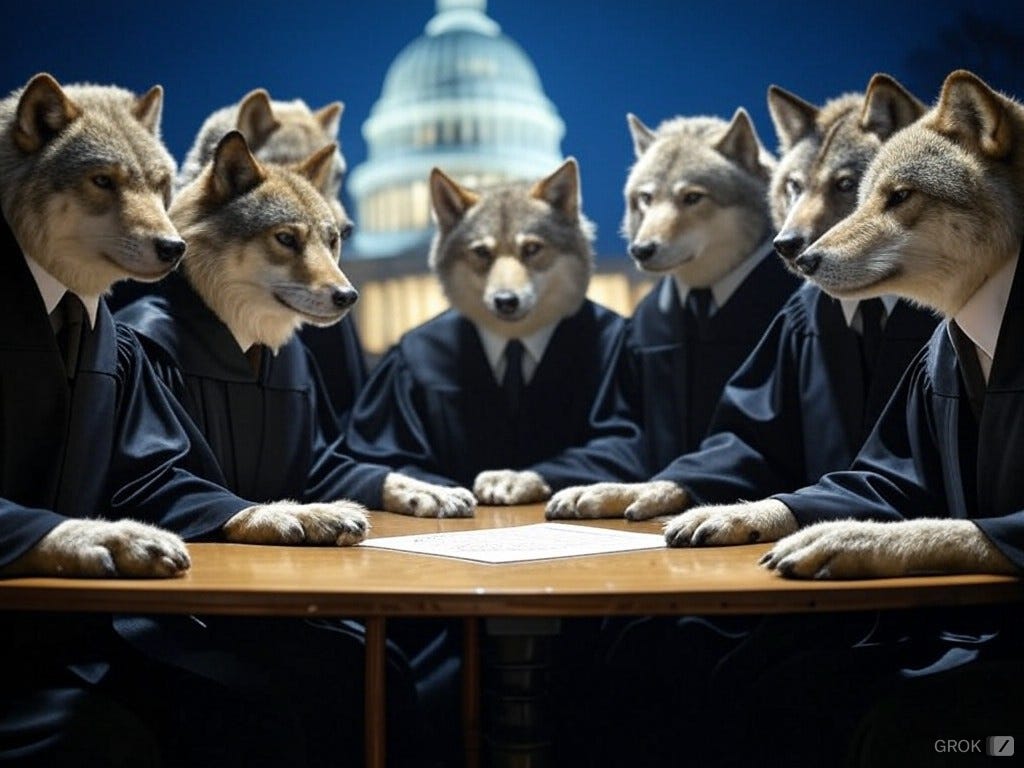
A recent court filing by attorney @BradGeyer @formerfeds Bradford L. Geyer in the United States District Court for the District of Columbia has thrown open the doors to what is being described as a constitutional crisis, centered around the prosecutions stemming from the January 6, 2021, Capitol riot.
The Allegations: A Four-Tiered System of Control
Geyer's motion for discovery paints a grim picture of an orchestrated campaign by the U.S. government to manipulate both public perception and the judicial process concerning the January 6 events. Here are the key elements:
Direct Government Control: Geyer alleges that federal agencies, including the FBI and the White House, exerted undue influence over social media platforms to censor content and users related to January 6. This included weekly meetings and real-time communication channels to enforce content removal.
Platform Implementation: Social media giants like Twitter and Facebook are accused of acting as arms of government censorship by banning thousands of accounts, removing videos, and shadow-banning users to shape a narrative that aligns with governmental interests.
Media Contractor Coordination: The filing points to economic dependencies of major news outlets on federal contracts, suggesting a conflict of interest where media coverage might have been tailored to support the government's narrative, particularly through entities like Reuters and The Washington Post.
Government Funding and NGO Deployment: Numerous NGOs and private companies, often funded or influenced by government money, were utilized to track, analyze, and control online discourse, effectively suppressing narratives that contradicted the official account of January 6.

The Impact on Fair Trials
The core of Geyer's argument revolves around the impossibility of securing an impartial jury in Washington D.C., where nearly one-third of the potential jurors are federal employees or have close family ties to government jobs. This demographic, combined with the economic and emotional impact of the Capitol riot on District residents, could inherently bias jury pools.
Moreover, Geyer criticizes the government's legal strategies, particularly under 18 U.S.C. § 231, for framing the events in a way that implicates every juror as having a vested interest in the outcome, thus violating the Sixth Amendment's assurance of an impartial jury.
The Call for Discovery
The motion demands extensive discovery into:
Communications between government officials and social media platforms.
Details of federal contracts with media entities.
Documentation of how content related to January 6 was controlled or censored.
This call for transparency isn't just about uncovering past actions but preventing what Geyer describes as a "constitutional injury" from becoming precedent. The filing suggests that without such discovery, the integrity of the judicial process and the First Amendment rights of Americans could be permanently compromised.
Legal and Cultural Implications
This case could potentially lead to a landmark ruling on how government agencies interact with private entities to control information, especially in politically charged contexts. It raises significant questions about where the line should be drawn between national security, public safety, and freedom of expression.
If these allegations hold, the implications extend beyond the courtroom into the realms of media freedom, government accountability, and the very nature of democratic discourse in the digital age. As this case unfolds, it will undoubtedly serve as a litmus test for the resilience of American constitutional safeguards in the face of modern technological and political complexities.

Conclusion
The filing by Geyer is not just a legal maneuver; it's a clarion call for a reevaluation of how modern governance and digital platforms intersect. With the potential to influence future policy, this case could either fortify or fracture the delicate balance between security, speech, and justice in the United States. As the legal world watches, the outcome might well echo through the annals of American legal history.
Epidemic of Fraud (Documentary, 2024)

Epidemic of Fraud is the award-winning documentary that explores the bizarre media, medical, and partisan political attacks levied against a class of ancient medications, told from the perspective of a former CNN journalist and Hollywood industry veteran. Why were the people who allowed the fentanyl disaster to go unchecked so eager to discredit a drug …